Baroque is an art of movement and emotion, where every detail is designed to amaze, surprise and captivate the eye.

Baroque What is it?

Baroque is an artistic movement that emerged in Europe at the end of the XVIᵉ century, in a context marked by profound religious and cultural changes, particularly after the Reformation. It developed rapidly in the XVIIᵉ century, particularly in Catholic countries, with the aim of touching the emotions and making a mark on the spirits.

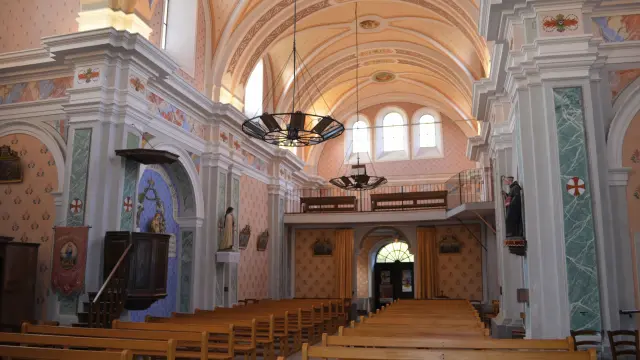
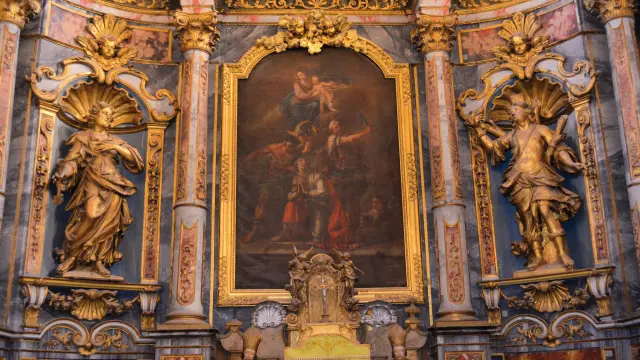
This style is characterised by its taste for movement, staging and an abundance of detail. In architecture, it is reflected in dynamic facades, curved shapes, the interplay of volumes and richly ornate decorations. Inside, the spaces are often spectacular, with gilding, frescoes, sculptures and eye-catching lighting effects.
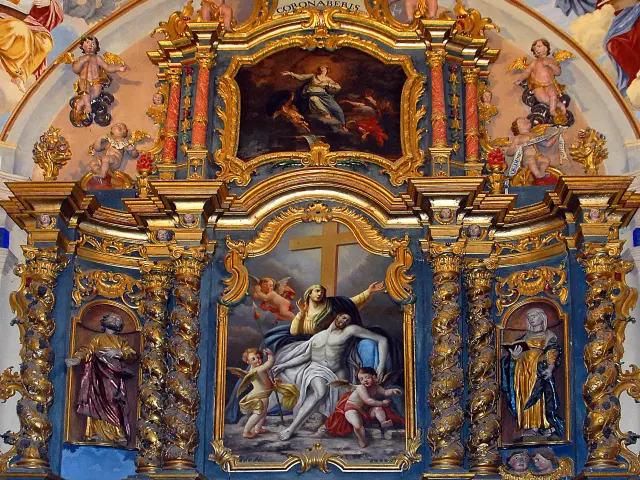
In the visual arts, such as painting and sculpture, Baroque emphasised realism, emotional expression and strong contrasts between light and shade. The aim is to create real dramatic intensity and bring the scenes depicted to life.

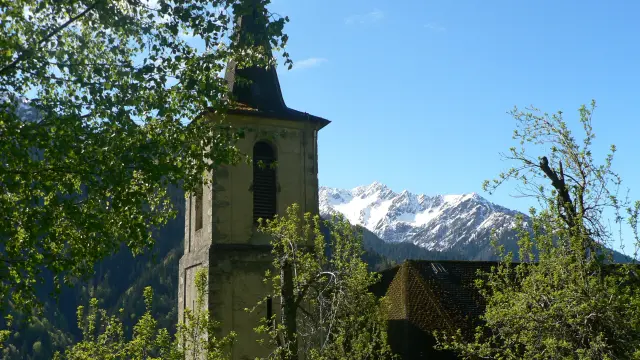
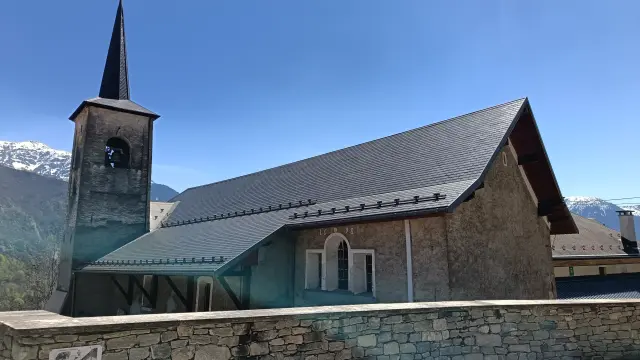
In certain Alpine regions such as the Maurienne, Baroque art has left a particularly strong mark. There are many carefully decorated churches and chapels, combining paintings, sculptures and gilding. This heritage bears witness to an accessible and lively art form, designed to amaze locals and visitors alike.
Travel diary Baroque in the Maurienne

Before you start your Baroque tour, you should know that most of the chapels and churches are only open to the public in summer. The rest of the year you can discover them via the virtual tours at the bottom of our page.

We can now begin our journey…

Aiguebelle
  • When you arrive in the Maurienne valley, you’ll come across the village of Aiguebelle. To discover the history of the Baroque, you can start by visiting two villages on the “Baroque Trail”.

Montsapey
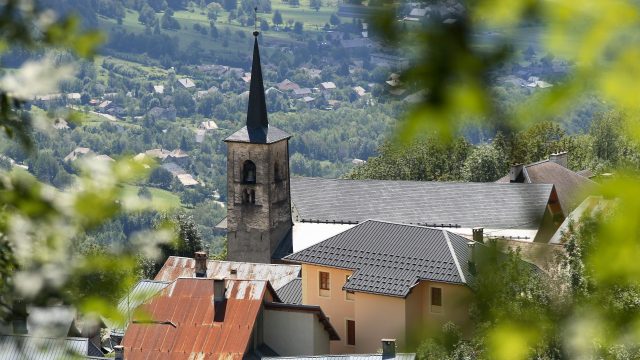
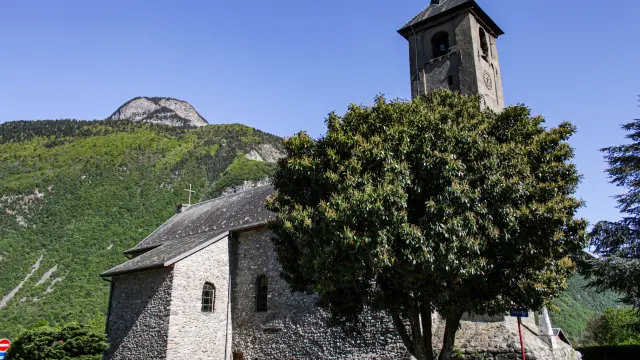
  • Situated at an altitude of 1000 metres, discover Montsapey and its church of Saint Barthélémy, a listed historic monument. Rebuilt in 1865, it is renowned for its trompe-l’oeil murals on a blue background, painted by P. Moretti in 1891.

    Continue on to Saint-Alban-d’Hurtières…

Saint-Alban-d'Hurtières
  • Famous for its lake, but also for its church.
    It was rebuilt in 1708. Its urban-style Baroque altarpiece, from the church of St Léger in Chambéry, dedicated to Saint-Alban the martyr, is listed as a historic monument.
    Tours are available with a heritage guide.

La Chambre
  • Continue your Baroque route towards La Chambre. Pass through three villages and discover the region’s rich heritage, with its sumptuous altarpieces in Baroque buildings, a rich and popular art form…

Montgellafrey
  • You can visit thechurch of Saint Théodule, in Montgellafrey. It was rebuilt in 1698. Its high altarpiece and twisted columns enclose a central painting of the Assumption (Pignol 1762).

Montaimont
  • Then discover the Notre-Dame-de-Beaurevers chapel, listed in the Inventaire supplémentaire des Monuments Historiques (Supplementary Inventory of Historic Monuments) and a major part of our Baroque heritage.
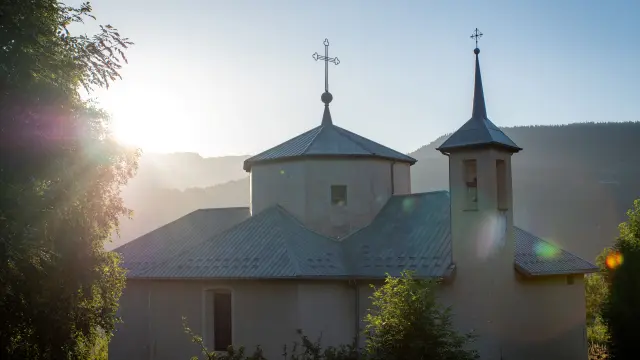
    The oratory, built in 1628, was rebuilt just a few metres away in 1766-1768, as it was a sanctuary of respite that attracted large numbers of worshippers from 1761 onwards. It is one of the main shrines in Savoie dedicated to the Virgin Mary.

Sainte-Marie-de-Cuines
  • Continue your visit to the church of Sainte-Marie-de-Cuines. This building with a single nave and cul-de-four apse was built in the 12th century. Around 1713, the community commissioned Sébastien Rosaz (1662-1730) to create the altarpiece and the painting of the high altar.

Saint-Jean-de-Maurienne
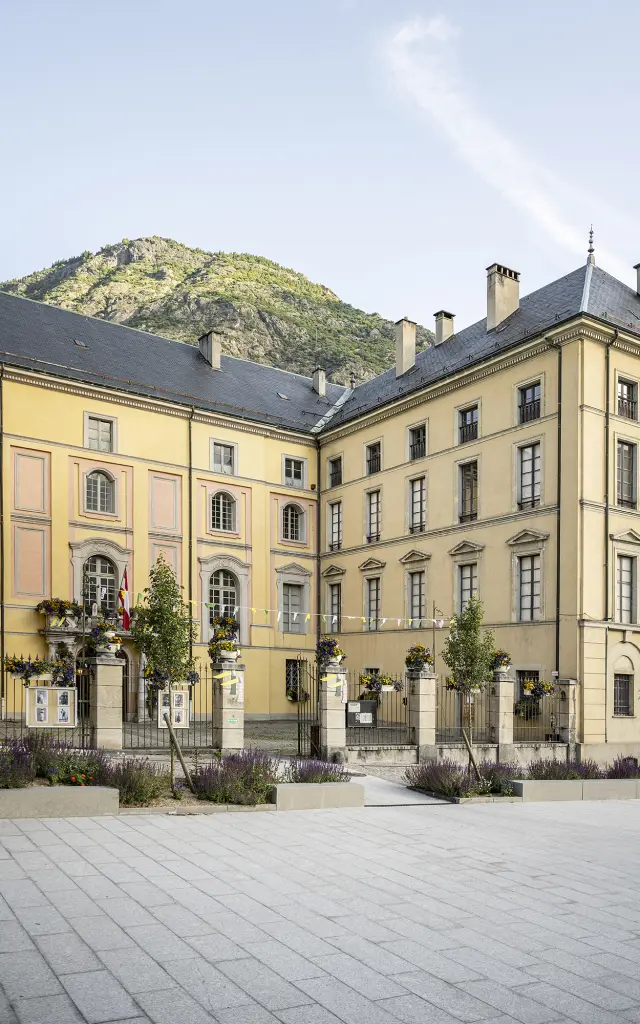
  • Finally, continue your Baroque itinerary via Saint-Jean-de-Maurienne, with a visit to the Bishops’ Palace. Throughout its history, this former bishop’s palace has been home to the Princes of Savoy who have stopped off here. Modified over time, it is a fine example of Baroque architecture. Inside, there is a monumental staircase reminiscent of those in Turin’s finest palaces, such as the Palais Madame.
    And now let yourself be guided by our selection of churches and chapels.

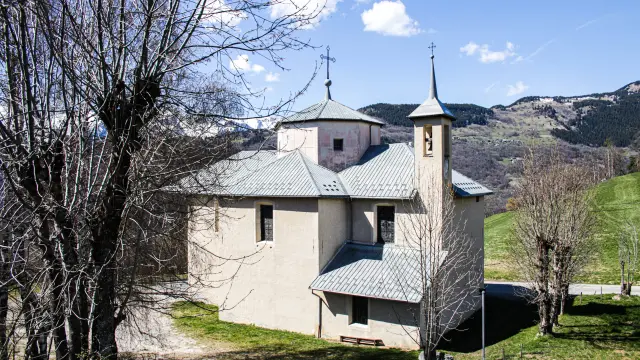
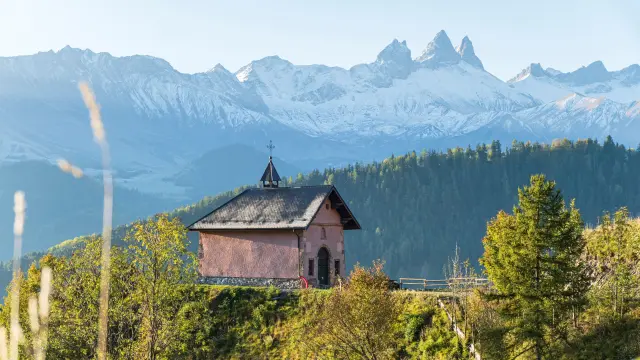
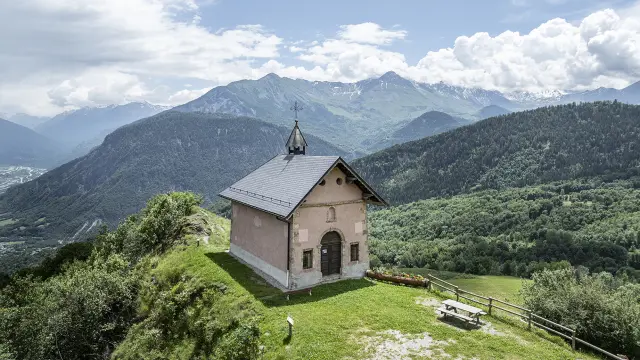
  • Along the way, you’ll come across Jarrier’s oldest chapel. The chapel of Saint Roch, better known as the Pink Chapel, was built in 1565. Its pink facades, its position (it stands out against the backdrop of the Aiguilles d’Arves) and its surprising location (it turns its back on the valley, due to the plague) make it a unique building. In addition, a Baroque-style altarpiece with columns frames a painting of the Virgin Mary.

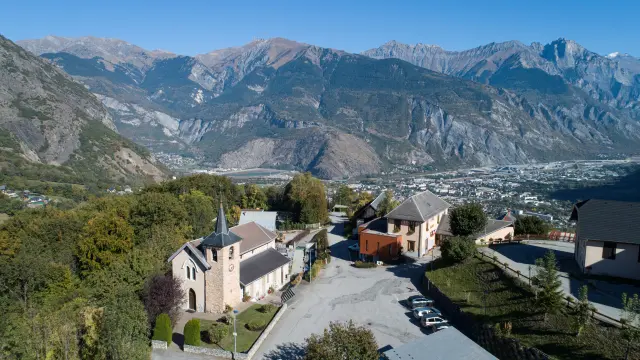
  • After this stop, continue on towards Saint-Pancrace, the neighbouring commune. Along the way, you’ll find the village church. Built in the 16th century under the patronage of Saint Pancrace, the church is Baroque in inspiration. Renovated in 2019, it has been given a new lease of life, including a starry sky on the vault. A modest but charming Alpine Baroque church.

Albiez-Montrond
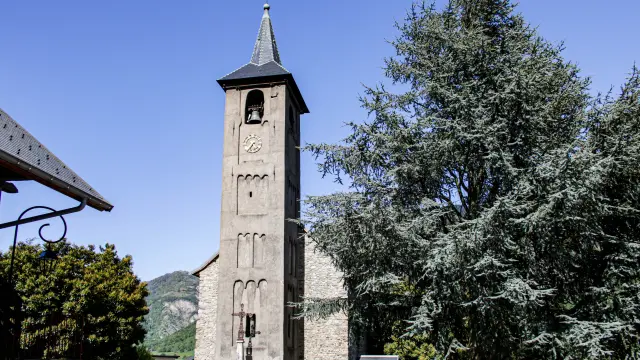
  • To round off your Baroque journey, one last church awaits you in Albiez-Montrond. This bell tower soaring towards the Aiguilles d’Arves is your guide to a treasure trove of Baroque Maurienne architecture. It was restored in the late 1990s. Completely rebuilt in 1674, Saint-Nicolas has a single nave with a cupola over the choir.

Our answers to your questions