Heritage just a click away

Ajouter aux favoris

Travel to the heart of the “Terres de Maurienne” region and discover its exceptional heritage through immersive virtual tours.

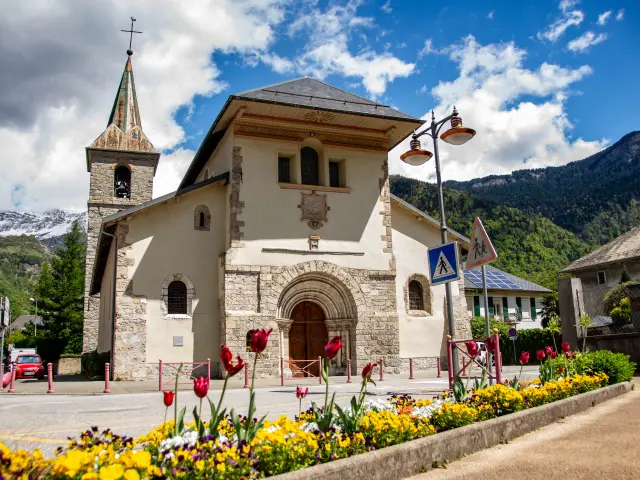
La Chambre Collegiate church of Saint Marcel

At the end of the 11th century, Artaud, Bishop of Maurienne, ceded the parish church of La Chambre to the Piedmontese abbey of Saint-Michel-de-la-Cluse in order to found a Benedictine monastery there.

The church, dedicated to the Assumption of the Virgin Mary, was established as a collegiate church in 1514 by Pope Leo X, at the request of Louis de Seyssel, Count of La Chambre. It then took the name of Saint-Marcel.

The building still has a remarkable sculpted alabaster portal from the late Romanesque period, which was reused during the restoration work carried out in 1688. Listed as a Historic Monument, it is comparatively dated to the 13th century.

The Cordeliers settled in La Chambre in the mid-14th century, with the agreement of Amédée de Savoie-Achaïe, Bishop of Maurienne, and his brother-in-law Jean II de La Chambre, Viscount of Maurienne.
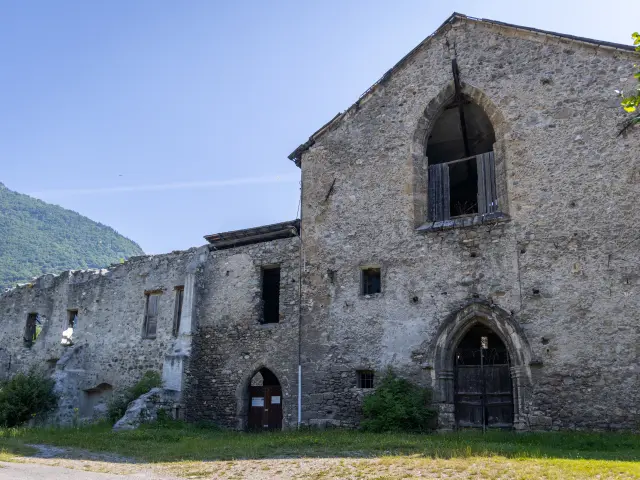
La Chambre Cordeliers Convent

The former Cordeliers de La Chambre convent is one of the rare Franciscan establishments still partially preserved in elevation in Savoie and, more generally, in the former dioceses north of the Alps (Geneva, Grenoble, Maurienne and Tarentaise).
The main example of these settlements can be found in Chambéry, where the present-day cathedral and the Musée Savoisien are made up of the former buildings of the Franciscan convent established around 1220.

In La Chambre, the establishment of the mendicants came later: thanks to the generosity of the de La Chambre family, the convent was founded in 1365 in a small village at the bottom of the Maurienne valley, between the Arc and the Bugeon torrents, a few hundred metres from the Romanesque Benedictine priory (now the parish church). Despite its apparent geographical isolation, La Chambre has been an important and regular crossing point since ancient times, on the road between Turin and Chambéry via the Combe de Savoie, the Maurienne, the Col du Mont-Cenis and the Val de Suse.

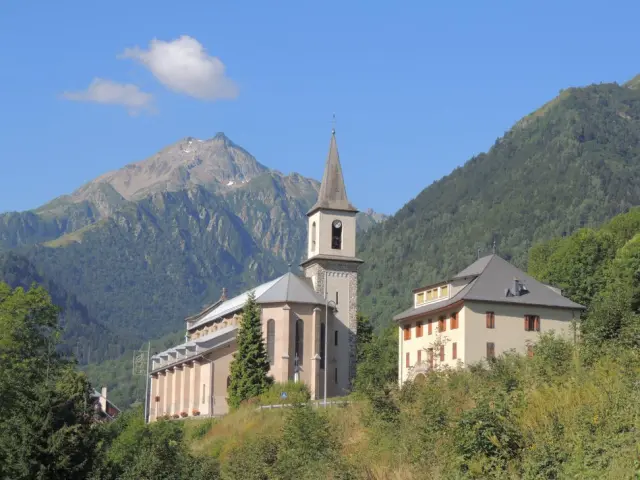
Saint-Colomban-des-Villards Church

The church of Saint-Colomban-des-Villards is located in Savoie, in the Maurienne valley. It was built following the attachment of the Duchy of Savoy to France under the Treaty of Turin (24 March 1860).

The original plans for the church were signed on 25 July 1862 by diocesan architect Joseph Marie Samuel Revel. Work was completed four years later.

Built in the neo-Gothic style, the church replaced an older Romanesque church in the commune’s former cemetery, which had become unhealthy.

The building has undergone many improvements over the centuries.

But in 1981, it suffered major damage caused by an avalanche.

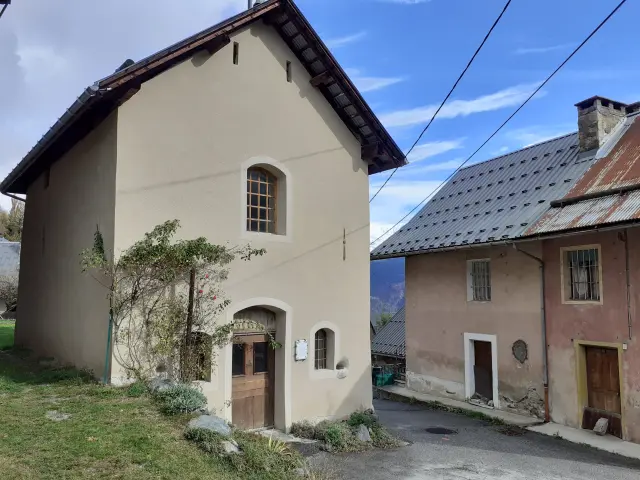
Saint-Alban-des-Villards Chapel of Premier Villard

The chapel dates from before 1635.

Annexed to the curacy of Saint-Alban in 1654, it was richly endowed but was damaged during the Revolution and suffered a fire around 1880.

Between 1894 and 1896, it was gradually restored by the parish priests Roche and Cuvex.

Discovered during renovation work on the Premier Villard chapel, the three Saint Reine boxes from Saint-Alban-des-Villards are among the thirty-six identified in France, no doubt brought back by pilgrims who went to Alise-Sainte-Reine, a major pilgrimage site between the 17th and 19th centuries.

Mysterious to our contemporary eyes, the “boxes of Saint Reine” are at once devotional objects, pilgrimage souvenirs and a small “theatre” depicting the life of the saint. Reflecting an original form of folk art, only rare examples can be found today because the materials used to make them are fragile and perishable (papier-mâché, wooden or terracotta figurines).

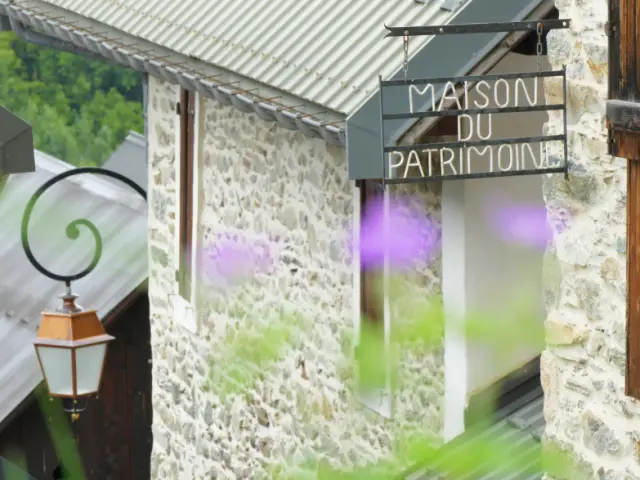
Saint-Colomban-des-Villards Heritage House

Discover the local heritage with a remarkable exhibition of village costumes in an old house typical of local architecture.
In an old-fashioned interior, magnificent costumes, embroidery and fabrics are on display for visitors to admire.
Visitors can admire the details of the clothes up close: shawls, dresses, aprons, embroidery, ribbons and jewellery.
You’ll be amazed by the refinement and precision of the stitching and seams, and the shimmering colours.
In another room, discover the interior of the house as it once stood. In the former stable, you’ll find a host of objects used in everyday life, for work and farming…